

CHAPTER 10: FROM BATTLEFIELDS TO BACKYARDS
Mesh networks may seem like the latest invention in a world hungry for faster, more resilient connectivity. But their story stretches back decades, beginning in places where failure simply wasn’t an option.
Born In The Line Of Fire
In the early days of military communications, a single broken antenna could silence an entire operation. Traditional networks, with their centralized control points, were too fragile for the unpredictability of the battlefield. Engineers and soldiers created systems where radios could relay signals in any direction, keeping communication flowing even when parts of the network failed. What began as a military necessity evolved into a tool for civilian life.
When Disaster Strikes
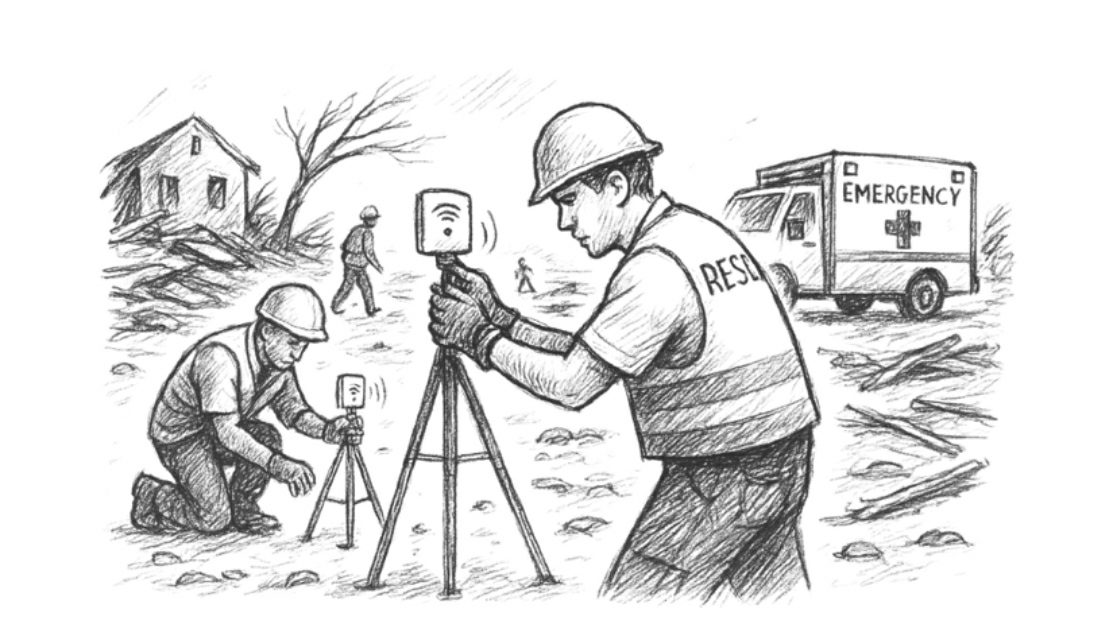
Imagine an earthquake toppling cell towers or a hurricane flooding power stations. In these moments, mesh networks can be lifesaving. Emergency crews carry small, portable nodes that create a pop-up web of connectivity. During California’s 2020 wildfire season, residents north of San Francisco faced blackouts exacerbated by the Public Safety Power Shut-off (PSPS) program. Utility companies voluntarily shut off power, taking down cell towers and delaying critical evacuation warnings. In response, local volunteers set up portable mesh nodes to link shelters, fire crews, and families in real time.
Bridging The Digital Divide and Ensuring Privacy
In rural areas, building fiber-optic cable is often too expensive for big telecom companies. Mesh networking allows neighbors to share internet access by hopping signals from roof to roof. A common concern is whether neighbors can see each other's activity. If a network is configured with encryption or a VPN, each home’s activity remains private. Without it, technically skilled users could potentially intercept traffic. Encryption is simple to turn on and highly recommended for routine use.
Global Mesh Case Studies
| Project Name | Location | Key Innovation |
|---|---|---|
| CUWiN | Illinois, USA | Decentralized network connecting libraries and community centers. |
| Guifi.net | Spain | One of the largest mesh networks; thrives on community participation. |
| Serval Project | Australia | Enables mobile phone mesh calls and "Rhizome" store-and-forward data. |
| Meshtastic | Global | Open-source, low-power LoRa radios for off-grid hiking and relief work. |
The Smart City Revolution and Quiet Defiance
In modern cities, mesh technology allows streetlights to talk to traffic sensors and air quality monitors to share data without straining a single hub. Beyond efficiency, mesh is a tool for freedom. When authorities in Iran imposed internet blackouts, communities used small, hidden mesh nodes to leapfrog messages from rooftop to rooftop, bypassing central servers. It is a living web that stays intact when ordinary systems fall apart.
What This Means For You
Alex, the business consultant, ensured his neighborhood mesh remained secure by pitching the idea of periodic security checks. Every few months, neighbors get together to check software updates and passwords. Whether you live in a high-rise or a quiet village, mesh networks give you more control over how you connect. Technology doesn’t have to be centralized or fragile—it can be as strong and dependable as the people who rely on it.