
CHAPTER 7: TOOLS OF SUCCESS
In the early hours of a spring morning, Lena stood in her kitchen, phone pressed to her ear, listening to static. A wildfire had roared through the valley overnight, taking down power lines and cell towers. Her team of volunteers was supposed to deliver food and supplies that day, but no one could reach her. She tried refreshing her messaging app. Nothing. It’s a moment nobody wants to experience—the realization that the tools you counted on aren’t enough. Whether you’re guiding a team, supporting loved ones, or managing projects, choosing the right tools means having reliable ways to stay in touch when things don’t go as planned.
Your Everyday Workhorse: The Primary Channel
Your primary channel is the familiar method you use without thinking—email, a team messaging app, or simple texting. Marcus, who works from airports and cafés, relies on Slack and a chat app for day-to-day work. It’s efficient until Wi-Fi disappears. Because your primary tool is the first line of defense, keep it in good shape: make sure everyone knows how to use it, update passwords regularly, and back up important data.
Alternate Routes: When The Main Road Closes
Alternate channels are your first detour when the main road is blocked. Asha, the parent juggling work and family, learned this when she left her phone at work. A neighbor’s phone helped her reach her spouse, but she knew she needed a better backup. Chris, a frequent traveler, had a similar realization. Despite having Global Entry and paper backups, she arrived at the airport only to realize her phone and tablet were still on the kitchen charger at home.
A solid alternate plan is to develop charm and humility to ask another person to borrow their phone. In Chris’s case, she politely asked a gate agent to use a desk phone. Her ability to persuade another human being to help her was more effective than a high-tech backup plan. Your PACE plan should include skills to rapidly build rapport with other people.
Contingency And Emergency Options
When the unexpected gets bigger—floods, blackouts, sudden evacuations—having a contingency and emergency channel can be the difference between stress and confidence. Satellite phones, handheld radios, pre-arranged meeting points, mesh networks, and paper contact lists might feel dramatic, but they work when everything else fails.
Emergency Power: Car Battery Setup
| Required Tool | Function |
|---|---|
| 12V Car Battery | The primary power source (fully charged). |
| Power Inverter | Converts 12V DC to usable USB/AC power. |
| USB Charging Hub | Allows 4–10 phones to charge simultaneously. |
| Solar Panel | Optional: Recharges the battery indefinitely. |
How to Charge Phones from a Car Battery
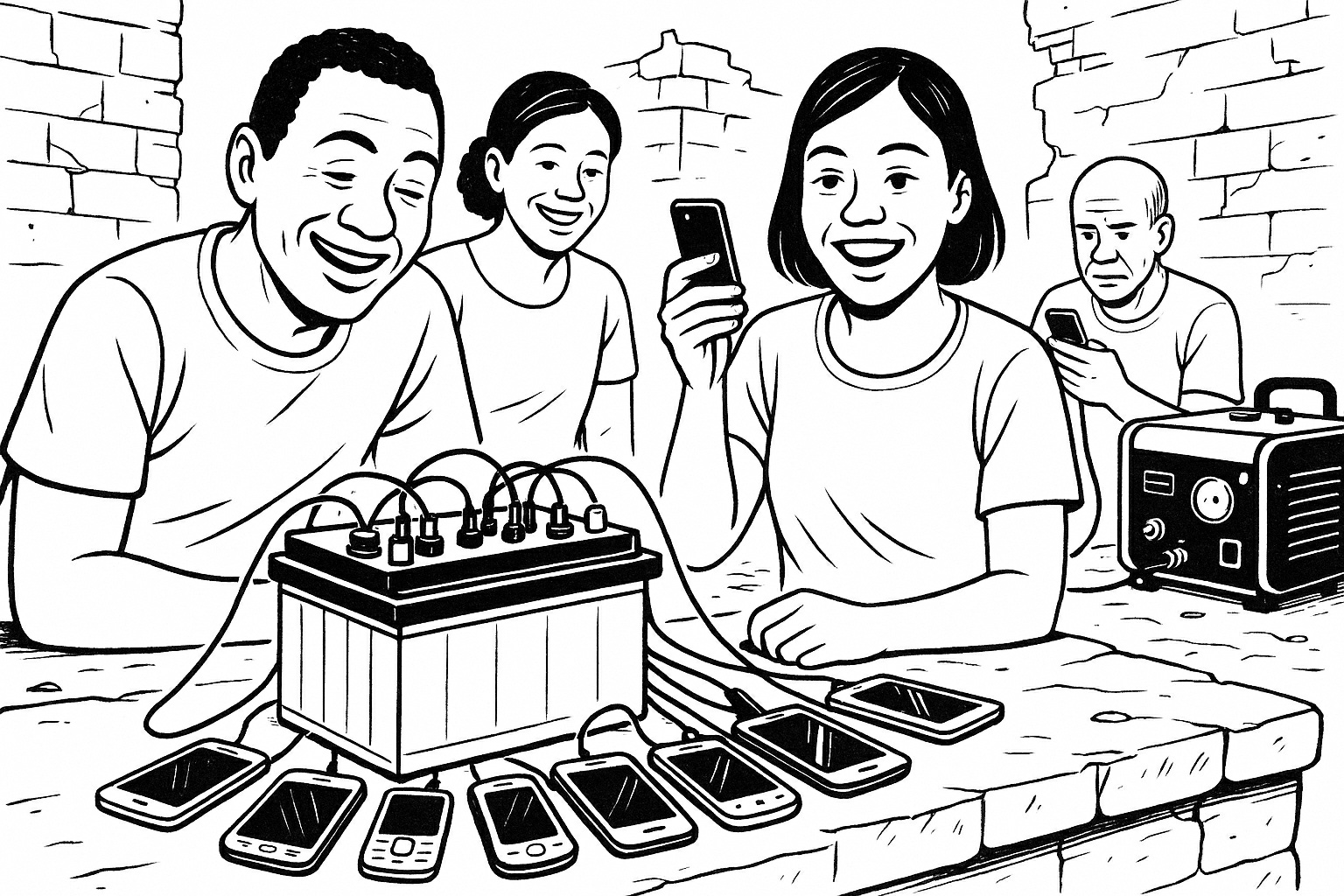
During the aftermath of the 2010 Haiti earthquake, survivors used car batteries to charge 8-10 phones at a time. You can do the same with tools likely already in your home. If you have an electric vehicle, it can even power your house for a day to a week.
Steps to Set It Up:
- Connect the inverter or adapter to the battery: Connect positive (red) and negative (black) leads to the corresponding terminals.
- Plug your USB charging hub into the inverter: Use a hub that supports multiple 2.1A ports for optimal speed.
- Connect your phones: Each phone draws only what it needs, but simultaneous charging drains the battery faster.
- Monitor power use: A typical battery holds around 50 amp-hours (Ah). Don't let the battery drop below 11.8V, or you may damage it.
Safety Notes: Keep the setup in a well-ventilated area, as lead-acid batteries can emit hydrogen gas. Use fuses or surge protectors to prevent shorts.
Start With People
Before adopting new tools, ask: Do the people I count on know how this works? Does it fit our environment? Will it be accessible in a hurry? Team building events or family game nights are great opportunities to test tools. You may be unpleasantly surprised to learn that an interface has changed since you last practiced.
A Success Story
After the wildfire, Lena invested in a satellite messaging plan and trained her team. When another fire swept the area, they switched seamlessly to the backup, delivering food without disruption. Local news hailed her as a hero. Meanwhile, Alex’s children found his printed "car battery" instructions and thought he was trying to break the car. They eventually used them on a camping trip to charge phones (using a spare battery), uploading photos to their private family page to show they were staying connected without "breaking the car!"